
 Image 1 of 2
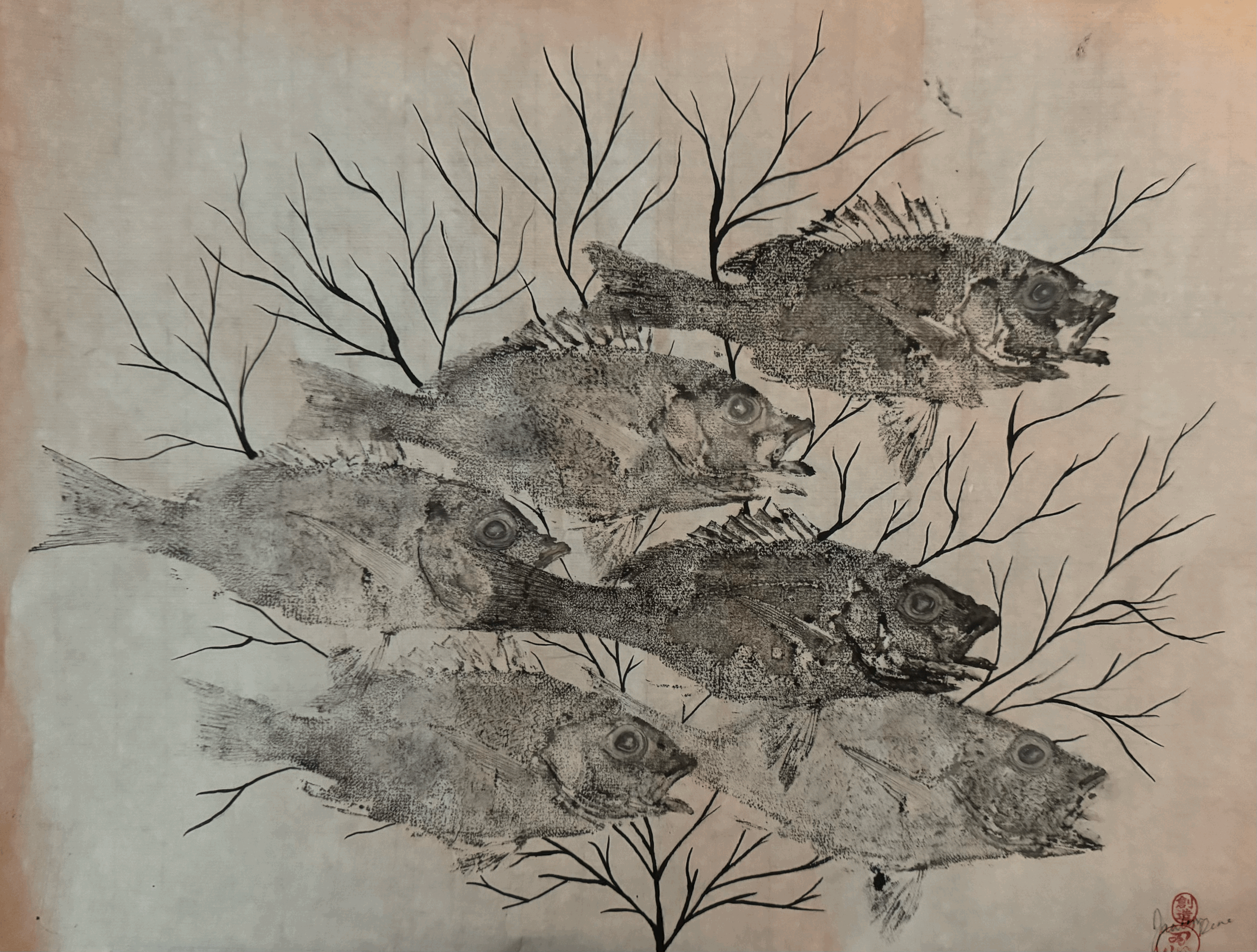 Image 2 of 2
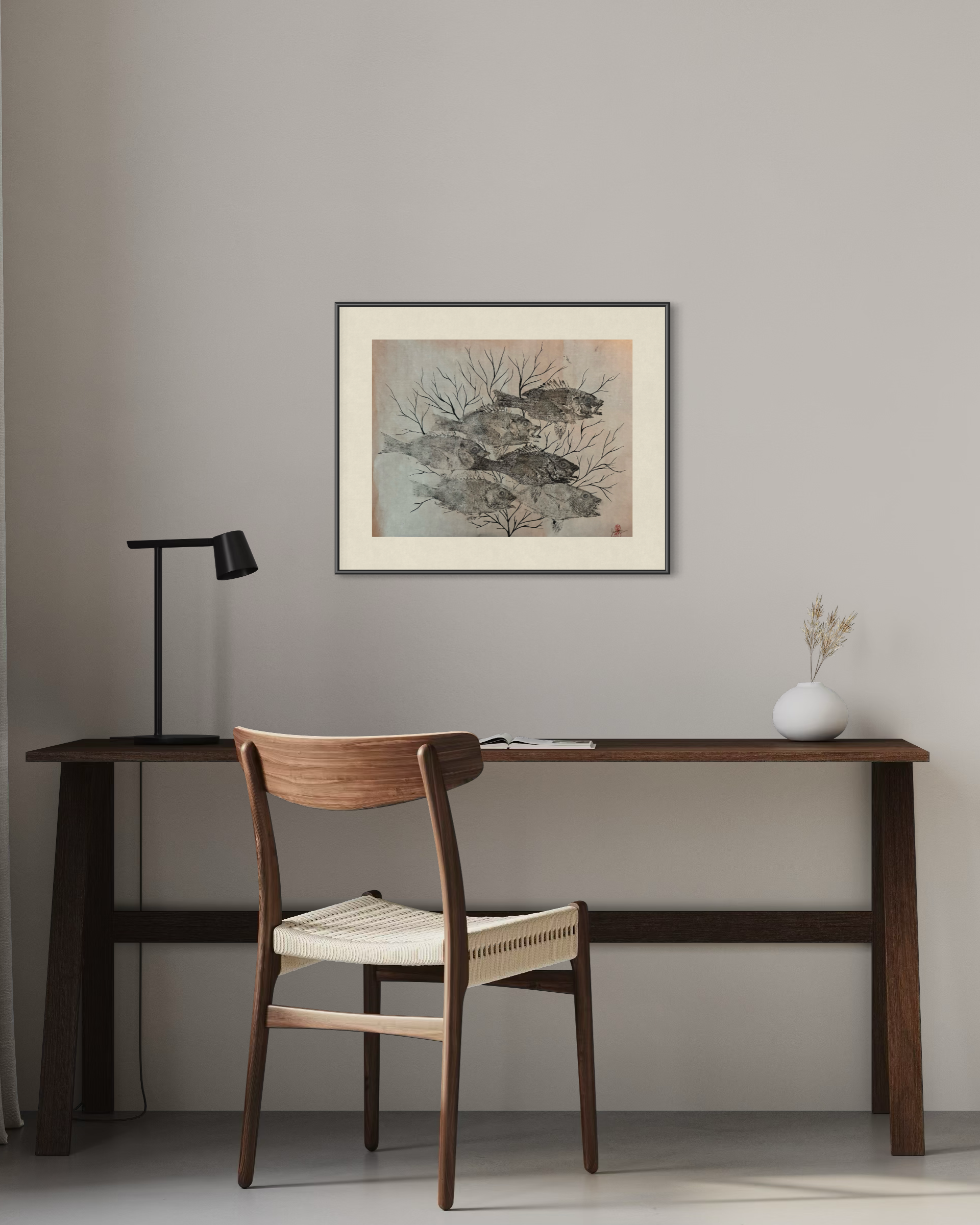
This original Taʻape gyotaku captures the movement and unity of a schooling fish through the traditional Japanese art form of Gyotaku. Printed by hand using traditional sumi ink on delicate Xuan paper, each impression preserves the intricate textures and natural beauty of the fish while remaining true to its organic form. The composition was created using Taʻape found along the shoreline in Hawaiʻi, lending the work a unique connection to place and moment.
Though visually striking, Taʻape are an invasive species in Hawaiian waters, where they compete with native reef fish and disrupt local ecosystems. Similar to lionfish in Florida, conservation efforts encourage their harvest through community fishing tournaments and by promoting their use as a sustainable seafood option in local cuisine.
Printed on Xuan paper. 14 × 17.5. Signed original. Unframed.
This original Taʻape gyotaku captures the movement and unity of a schooling fish through the traditional Japanese art form of Gyotaku. Printed by hand using traditional sumi ink on delicate Xuan paper, each impression preserves the intricate textures and natural beauty of the fish while remaining true to its organic form. The composition was created using Taʻape found along the shoreline in Hawaiʻi, lending the work a unique connection to place and moment.
Though visually striking, Taʻape are an invasive species in Hawaiian waters, where they compete with native reef fish and disrupt local ecosystems. Similar to lionfish in Florida, conservation efforts encourage their harvest through community fishing tournaments and by promoting their use as a sustainable seafood option in local cuisine.
Printed on Xuan paper. 14 × 17.5. Signed original. Unframed.